


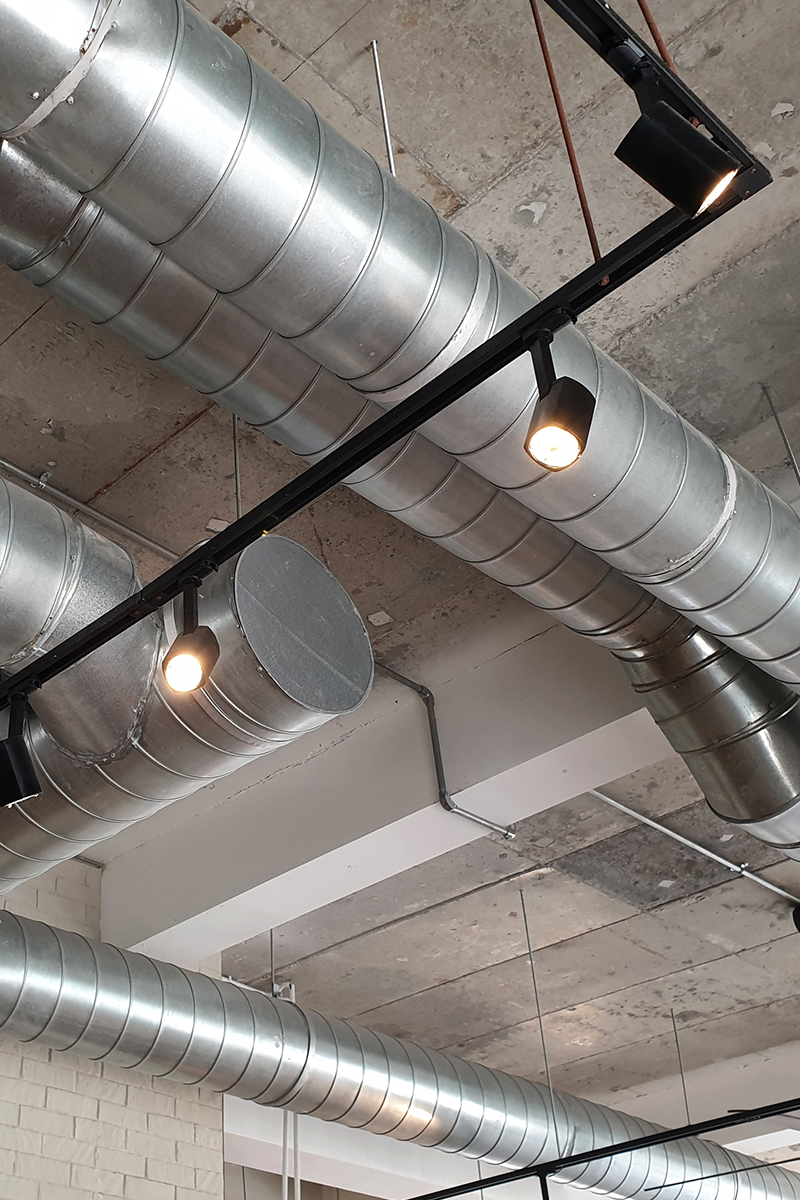
A reliable ventilation system plays an essential role in creating a comfortable, healthy and productive building. Whether you manage a retail premises, healthcare facility, school, commercial property or another busy environment, effective ventilation helps control air quality, temperature, moisture and airborne contaminants. When an existing system starts struggling, however, the warning signs are not always obvious.
SEWS Ductwork Services Ltd is a specialist manufacturing and installation company supplying ductwork and ventilation services to the construction industry. With more than 20 years of experience in the ventilation sector, the team designs, manufactures and installs ductwork and related components to high standards. Services include ductwork installation, manufacture and installation, design, insulation, fire-rated manufacture and installation through to certification, duct cleaning and bespoke ventilation components.
In this blog, we explore seven common signs that your building’s ventilation system may need upgrading. Recognising these issues early can help you improve indoor air quality, support building users and avoid allowing an ageing or unsuitable system to become an increasingly costly problem.
Why does effective ventilation matter?
Ventilation is about much more than moving air around a building. A properly designed system removes stale air and unwanted pollutants while introducing fresh air where it is required. In commercial and public buildings, this can contribute to a more pleasant environment for employees, customers, visitors, pupils and patients.
A ventilation system also needs to suit the building it serves. Changes to occupancy, room layouts, equipment, usage or building regulations can all affect ventilation requirements. A system that performed adequately when originally installed may no longer provide the same level of performance years later.
Regular inspection and maintenance can identify developing issues, but there are also practical signs that your system may need more significant attention. If several of the following problems are familiar, it could be time to consider an upgrade.
7 Signs Your Building’s Ventilation System Needs Upgrading
Ventilation problems can develop gradually, meaning building owners and managers may become accustomed to poor performance. However, persistent changes in air quality, comfort, noise or moisture should not simply be accepted as normal.
The following seven signs can indicate that an existing system is no longer meeting the needs of your building. A professional survey can help determine whether repairs, cleaning, alterations or a complete upgrade are the most appropriate solution.
1. Poor Indoor Air Quality
One of the clearest signs of inadequate ventilation is air that feels stale, stuffy or unpleasant. Occupants may notice lingering odours, condensation or a general lack of fresh air, particularly in busy rooms. High levels of carbon dioxide and airborne pollutants can also build up when fresh air is not being introduced effectively. If poor air quality is persistent despite routine cleaning and normal occupancy, your ventilation system may lack the capacity or efficiency required for the space. An upgrade can help improve airflow and provide a more appropriate balance between extraction and fresh air supply.
2. Increasing Condensation and Moisture
Condensation can be a visible indication that moisture is not being controlled effectively. It may appear on windows, walls, ceilings or other cold surfaces, especially in areas where humidity is regularly generated. Excess moisture can contribute to mould growth and damage finishes, furnishings and building materials over time. Although condensation can have several causes, inadequate ventilation is an important factor to investigate. If moisture problems continue despite reasonable heating and maintenance, your existing ventilation arrangements may need improving to remove humid air more effectively.
3. Unusual or Increasing Noise
Ventilation systems should operate without creating excessive disruption. If fans, motors, grilles or ductwork have become noticeably louder, rattling, vibrating or producing unusual sounds, there may be an underlying mechanical or airflow issue. Noise can result from worn components, obstructions, poor installation, damaged ductwork or equipment working harder than it should. In some cases, maintenance may resolve the problem. However, persistent noise from ageing equipment can indicate that an upgrade would provide a more reliable and quieter solution, particularly in environments such as offices, schools, healthcare settings and retail premises.
4. Uneven Temperatures and Poor Air Distribution
Do some rooms feel noticeably warmer, colder or more uncomfortable than others? Uneven temperatures can indicate that air is not being distributed effectively throughout the building. Changes to internal layouts, partitions, occupancy levels or room use can all affect how air moves through a ventilation system. Ductwork may also have become unsuitable for the current configuration. An upgraded system can be designed around the building’s present requirements rather than relying on arrangements that were created for a different use. Better distribution can support comfort while helping the system operate more effectively.
5. Rising Energy Costs
An inefficient ventilation system may require more energy to achieve the required level of airflow. Fans, motors and associated equipment can work harder when components are ageing, airflow is restricted or the system has not been properly matched to the building. Rising energy costs do not automatically mean that ventilation is responsible, but persistent increases are worth investigating alongside other warning signs. A professional assessment can identify opportunities to improve efficiency. In some circumstances, replacing outdated components or redesigning parts of the system may help reduce unnecessary energy use while maintaining appropriate ventilation.
6. Frequent Repairs and Recurring Faults
If your ventilation system seems to need attention repeatedly, the cost and disruption can quickly add up. Frequent fan failures, damaged ductwork, control problems or recurring airflow issues may suggest that individual repairs are treating symptoms rather than addressing the underlying condition of the system. Older equipment can also become increasingly difficult or expensive to maintain. Upgrading does not necessarily mean replacing every component, but it can provide an opportunity to assess the complete installation and identify where improvements would deliver the greatest long-term benefit. A planned upgrade may be more practical than repeatedly responding to breakdowns.
7. Your Building’s Needs Have Changed
Perhaps the most important sign is simply that the building is no longer being used in the way it was when the ventilation system was designed. Extensions, refurbishments, new equipment, altered room layouts, increased occupancy or changes in business operations can all affect ventilation requirements. A system designed for one purpose may not provide adequate airflow for another. Rather than assuming the existing installation can accommodate every change, it is sensible to review the ventilation requirements when the building changes. A bespoke assessment and upgraded design can help ensure ductwork and ventilation provision are appropriate for the building as it operates today.
Ultimately, recognising these warning signs early can help you avoid unnecessary disruption, rising running costs and declining indoor comfort. A professional ventilation assessment can establish whether your existing system can be improved or whether a full upgrade would provide a more effective long-term solution.
What happens if you ignore ventilation problems?
Ignoring ventilation issues can allow relatively manageable problems to become more disruptive. Poor airflow, excessive moisture, unpleasant odours and uncomfortable temperatures can affect the experience of people using the building. Depending on the circumstances, inadequate ventilation may also contribute to condensation, mould and deterioration of internal finishes.
There can also be operational consequences. Frequent breakdowns may interrupt normal activities, while inefficient equipment can increase running costs. Addressing concerns proactively allows building managers to understand the condition of the system and make informed decisions about repairs, cleaning, replacement or upgrading.
A ventilation upgrade should always be based on the building’s specific requirements. Professional design and installation can help ensure that new or modified ductwork works effectively with the wider system rather than simply replacing components without considering the whole installation.
When should you upgrade a ventilation system?
There is no single age at which every ventilation system needs replacing. The right time to upgrade depends on its condition, performance, usage, maintenance history and the requirements of the building. A relatively old system may continue to perform effectively if it has been well maintained, while a newer installation may require changes if the building’s use has significantly changed.
If you are experiencing several of the warning signs outlined above, arranging a professional survey is a sensible starting point. It can also help establish whether a targeted modification or broader upgrade is more appropriate.
How can SEWS Ductwork help?
We provide ductwork manufacturing and installation services for a wide range of construction and commercial requirements. With more than 20 years of ventilation industry experience, we have developed the expertise to support projects from design and manufacture through to installation.
Our team can provide installation-only services or undertake manufacture and installation, depending on project requirements. Services include ducting, insulation, fire-rated ductwork manufacture and installation, certification and duct cleaning. SEWS can also carry out full surveys of ductwork requirements and provide drawings for the manufacture of components.
Bespoke manufacturing is another important part of the service. We can manufacture ventilation components to exact specifications, including bespoke galvanised internally lined parts such as tapers, tapering sets and square-to-round sections for fan coil and air conditioning systems. Powder coating is also available to specified RAL and RHAL colours.
SEWS works effectively across many retail, healthcare, schools and commercial sectors, with projects covering London, Essex and Kent. Our experienced site teams include qualified personnel with relevant industry training, while we are SAFE CONTRACTOR approved. This combination of manufacturing capability, technical knowledge and installation experience allows us to provide practical solutions for projects with varied requirements. Contact us today!
FAQs
How often should a commercial ventilation system be inspected?
Inspection frequency depends on the type of building, system and use. Regular maintenance and professional assessment can help identify developing problems before they become more serious.
How do I know if my ventilation system is outdated?
Persistent poor airflow, excessive noise, condensation, frequent breakdowns, rising energy costs or changes to building use can all indicate that the system needs assessment or upgrading.
Can ventilation ductwork be upgraded without replacing everything?
Yes. Depending on the condition and design of the existing system, targeted modifications or replacement of specific components may be possible. A professional survey can establish the most suitable approach.
Does poor ventilation cause condensation?
Inadequate ventilation can contribute to condensation because moist air is not removed effectively. However, condensation can have multiple causes, so the building should be assessed properly.
Can better ventilation reduce energy costs?
An appropriately designed and maintained system can operate more efficiently than an ageing or poorly configured installation. Potential savings depend on the existing system and the proposed improvements.
What types of buildings need commercial ventilation?
Many buildings require effective mechanical or natural ventilation arrangements, including offices, retail premises, schools, healthcare facilities and other commercial environments.
Can SEWS manufacture bespoke ductwork?
Yes. SEWS manufactures bespoke ventilation components to customer specifications and can work from drawings to produce items for particular system requirements.
Does SEWS install ductwork as well as manufacture it?
Yes. SEWS provides both installation-only services and manufacture-and-installation solutions, depending on the requirements of the project.
Does SEWS provide fire-rated ductwork?
Yes. Fire-rated ductwork manufacture and installation are among the company’s services, including associated certification where required.
How can I arrange a ventilation assessment?
Contact SEWS Ductwork Services Ltd to discuss your building, existing ventilation system and requirements. The team can advise on suitable ductwork and ventilation services for your project.
In Conclusion: Create a Healthier, More Efficient Building
Your ventilation system should support the people and activities inside your building, not become a source of recurring problems. Stale air, condensation, unusual noise, uneven temperatures, rising energy costs, frequent repairs and changing building requirements are all reasons to investigate whether an upgrade is needed.
The right solution will depend on your building, existing installation and operational requirements. Professional assessment, careful design, quality manufacturing and expert installation can help create a ventilation system that is better suited to the demands of your property.
If your building’s ventilation system is showing signs that it is struggling, SEWS Ductwork Services Ltd can help. With extensive experience in ductwork manufacturing, design and installation across London, Essex and Kent, the team can provide practical solutions tailored to your requirements.
Contact SEWS Ductwork Services Ltd today to discuss your ventilation or ductwork project and find out how the team can assist.